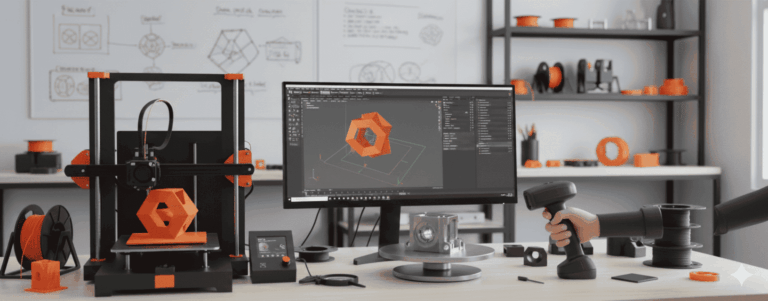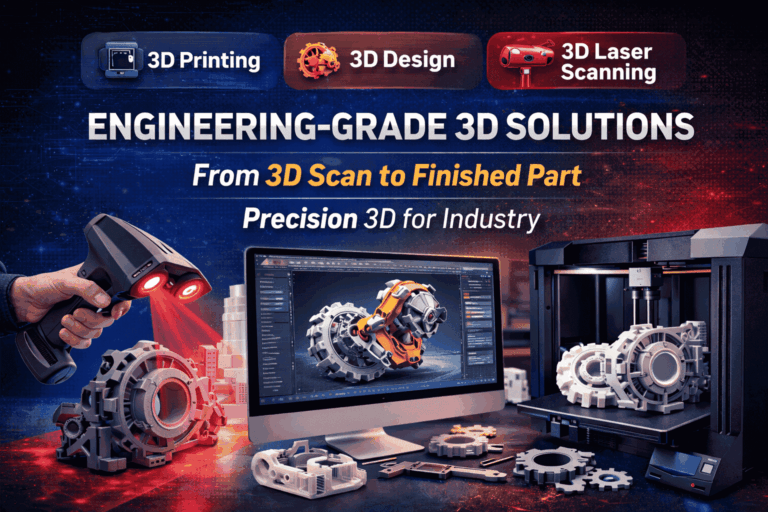
Manufacturing is steadily moving toward more digital, flexible, and data-driven processes, and 3D printing, scanning, and design technologies are playing a central role in this transformation. As industries demand faster development cycles, customization, and reduced dependency on traditional supply chains, additive manufacturing and digital engineering workflows are becoming essential tools rather than optional technologies. The ability to move seamlessly from physical parts to digital models and back to production enables manufacturers to respond quickly to changing requirements.
Advancements in 3D printing materials and technologies are expanding the range of functional and end-use applications. Engineering-grade polymers, composites, and metal printing processes are making it possible to produce stronger, lighter, and more complex parts that meet industrial performance standards. At the same time, improvements in machine accuracy, repeatability, and process control are making additive manufacturing more reliable for production environments.
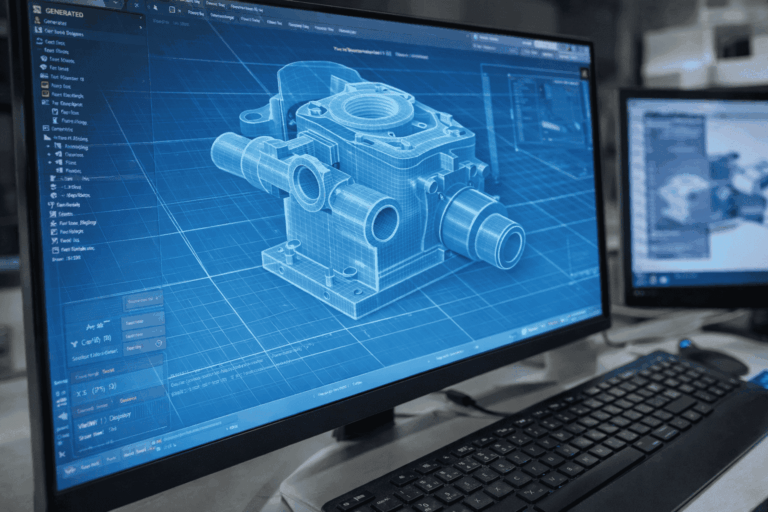
3D scanning and reverse engineering are also becoming increasingly important as manufacturers work with legacy equipment and complex assemblies. The ability to capture accurate digital representations of physical components allows companies to maintain, upgrade, and optimize systems without relying on original documentation. When combined with advanced CAD design tools, scanned data can be used for redesign, simulation, and performance improvement, further integrating digital workflows into manufacturing.
The future of manufacturing will likely involve hybrid production models that combine 3D printing with traditional methods such as CNC machining and injection molding. In these workflows, additive manufacturing supports rapid prototyping, tooling, and low-volume production, while conventional processes handle large-scale manufacturing. This balanced approach allows manufacturers to leverage the strengths of each method while maintaining efficiency and quality.
At ScanPrint3D, we see these technologies as practical solutions that support real-world manufacturing needs rather than experimental tools. By focusing on accuracy, application-driven design, and production-ready output, we help engineering companies adopt 3D printing, scanning, and design technologies in ways that deliver measurable value today while preparing them for the future of manufacturing.