In modern manufacturing, downtime is one of the most expensive challenges businesses face. Whether caused by unexpected equipment failures, worn-out machine components, alignment issues, or maintenance delays, every minute of production stoppage can result in lost revenue, missed deadlines, and reduced operational efficiency. As manufacturers strive to improve productivity and maintain a competitive edge, 3D scanning technology has emerged as a powerful solution for minimizing downtime and streamlining maintenance processes.
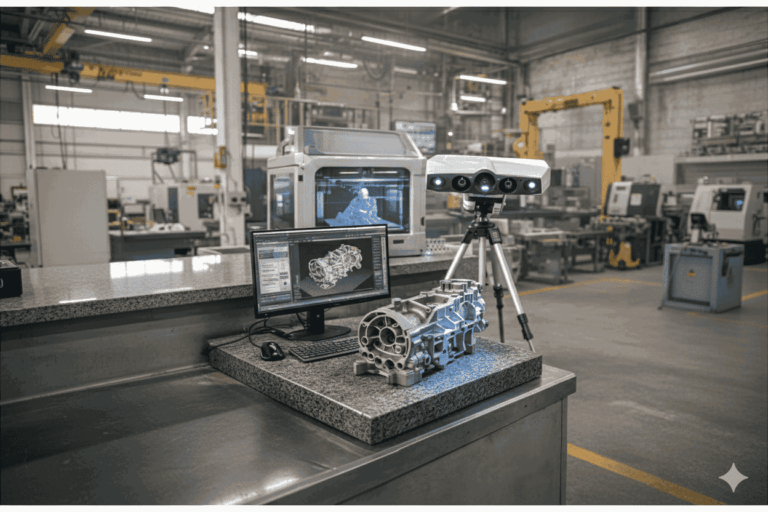
3D scanning enables manufacturers to capture highly accurate digital representations of machines, components, and production environments within minutes. Unlike traditional measurement methods that often require extensive manual work and prolonged equipment shutdowns, 3D scanners quickly collect millions of data points to create precise 3D models. This speed and accuracy allow maintenance teams to identify wear, deformation, misalignment, and damage before they develop into critical failures that can halt production.
One of the most significant ways 3D scanning reduces downtime is through predictive maintenance. By regularly scanning critical machinery and comparing the collected data with original design specifications, manufacturers can detect small changes that indicate potential problems. Components showing signs of wear can be repaired or replaced during scheduled maintenance windows rather than after a sudden breakdown. This proactive approach helps prevent unexpected shutdowns and extends the lifespan of valuable equipment.
Another major advantage of 3D scanning is its ability to accelerate the replacement of damaged or obsolete parts. In many manufacturing facilities, older machines may no longer have readily available CAD files or replacement components. Traditional reverse engineering methods can be time-consuming and prone to inaccuracies. With 3D scanning, engineers can quickly capture the geometry of an existing part, generate accurate digital models, and produce replacements using modern manufacturing techniques. This significantly reduces the time required to restore equipment and resume production.
3D scanning also plays a critical role in machine alignment and installation. Improper alignment of equipment can lead to excessive vibration, increased wear, energy inefficiencies, and unexpected failures. High-precision 3D scanning systems provide detailed measurements that help technicians identify alignment issues quickly and make accurate corrections. As a result, machines operate more efficiently, experience fewer breakdowns, and require less unplanned maintenance.
Quality control is another area where 3D scanning contributes to reduced downtime. Manufacturing defects that go unnoticed can cause production interruptions, product recalls, and costly rework. By integrating 3D scanning into inspection workflows, manufacturers can compare produced parts against CAD models and detect deviations in real time. Early identification of quality issues prevents defective products from moving through the production line and reduces disruptions to manufacturing schedules.
The technology is equally valuable during facility upgrades and plant expansions. Accurate 3D scans of existing production environments allow engineers to plan equipment installations and modifications with confidence. Potential clashes and space constraints can be identified before implementation, reducing the risk of delays and unexpected shutdowns during project execution. This level of planning helps maintain production continuity while improvements are being made.
In industries such as automotive, aerospace, heavy engineering, energy, and industrial manufacturing, where even a few hours of downtime can result in substantial financial losses, the return on investment from 3D scanning can be significant. Faster inspections, improved maintenance planning, accurate reverse engineering, enhanced quality control, and efficient equipment alignment all contribute to keeping production lines running smoothly and efficiently.
As manufacturing continues to embrace digital transformation, 3D scanning is becoming an essential tool for operational excellence. By providing accurate, real-time data and enabling faster decision-making, this technology helps manufacturers reduce unplanned downtime, improve asset reliability, and increase overall productivity. Companies that invest in 3D scanning solutions today are better positioned to maintain continuous operations, lower maintenance costs, and achieve long-term manufacturing success.